Army
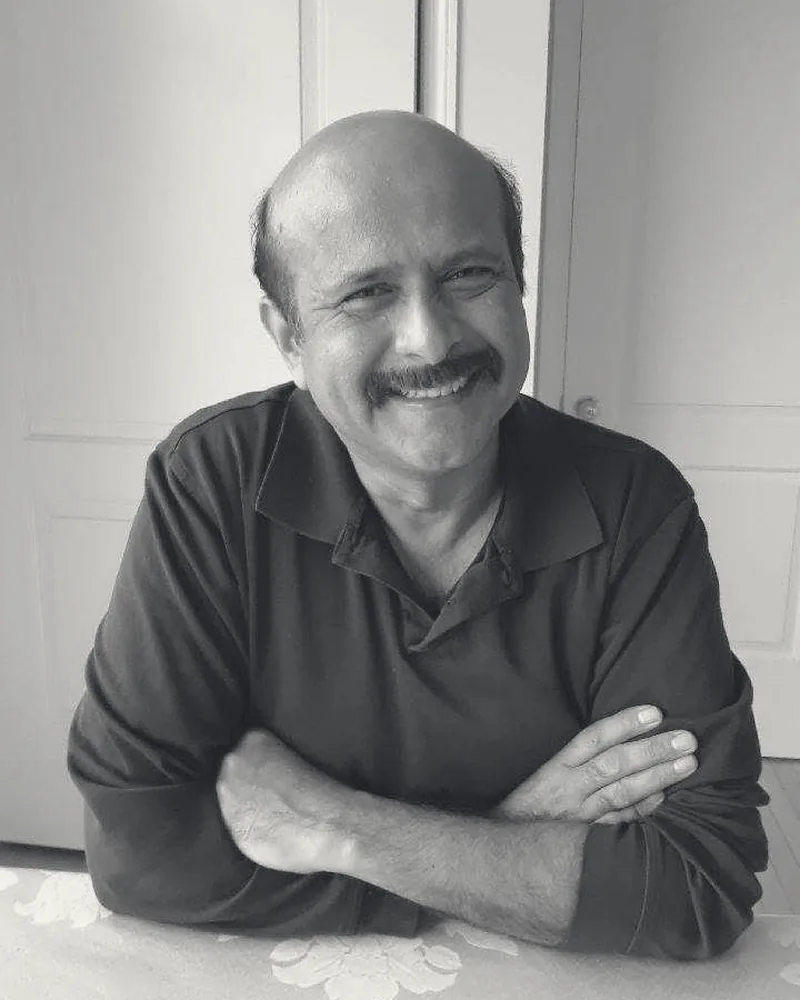
Azim Karim
- Generation
- First Generation
- Branch
- Army
Before
Azim Karim was born in Uganda, in East Africa. In 1972, Idi Amin's government expelled tens of thousands of South Asians and gave the families ninety days to leave. His family was among them. They came to the United States as refugees and resettled in Des Moines, Iowa, where he finished his last year of high school in a new country and a new language.
He enlisted in the Army in 1977, four years after the draft ended and five years after he arrived. The Army of 1977 was an all-volunteer force, and its medical branch trained its own medics. In his own account, he was not chasing a calling. He was young, and he wanted to do something different.
He is the earliest-serving Ismaili veteran the record has found.
Service
Basic training ran six weeks. Then the Army sent him to Fort Sam Houston, in San Antonio, where it trained its medics, nurses, and technicians. The post had been the center of Army medical training since the 1940s.
Karim started as a 91B, Field Medic. The Army offered him the upgrade to 91C, the advanced track of another three to six months, and he took it. The 91C track was the Army's practical nursing course, and it added ward work to field medicine.
Clinical rotations took him to Fort Stewart, Georgia. Then came the assignment he had asked for: Germany.
He was posted to the 3rd Medical Battalion in Mannheim, near Heidelberg, and he spent two years there. The battalion put him in a dispensary for three months, handling the daily medical needs of a military family community, and in the hospital for three months after that. A dispensary was the post clinic: sick call in the morning, appointments through the day, and the ordinary medical care of Soldiers and their families. The hospital took the cases the dispensary could not handle.
Mannheim sits where the Neckar meets the Rhine, south of Frankfurt. It was a river port and an industrial city, and in those years it was inside the American garrison in West Germany — the ground force NATO kept in Europe. The Army's evacuation chain ran from an aid station to a field hospital to a general hospital, and the fixed hospitals in Germany were the receiving end of it.
He made friends on the post and trained alongside Soldiers who were white, Black, Chinese American, and Korean American. He traveled while he was in Germany.
When the two years ended, the Army wanted him to re-enlist. He said no. Three years was what he had signed for, and in 1980 he took an honorable discharge.
After
He came home to Fort Lauderdale, Florida. The GI Bill put him back in school: Miami Dade Community College for the prerequisites, then an associate degree in physical therapy, with additional coursework at Florida International University.
He had rotated through the hospital's departments in Mannheim, physical therapy among them. In his own account, it was the work that stayed with him, the way it helped people move again.
He worked as a physical therapist for decades, and he retired more than ten years ago.
The travel came after the retirement. His wife, whom he met on a visit to Pakistan, goes with him. They have been married for more than forty years and have been to Pakistan, north India, south India, Australia, New Zealand, and Easter Island, sometimes on organized tours and sometimes on their own. They have a daughter in Austin, a son, and a grandson.
The record begins with him. It begins because a young man in Iowa wanted to do something different.
Service record
- Branch
- Army
- Years
- 1977–1980
- Rate / MOS
- 91B/91C, Field Medic
- Units
- 3rd Medical Battalion · To 1980
The American garrison in Germany
In 1977 the U.S. Army kept a standing force in West Germany as part of NATO's central front. The posts there held divisions, corps support units, and the hospitals and clinics that served the Soldiers and families of the garrison. Mannheim, in the Rhine valley near Heidelberg, was one of those posts.