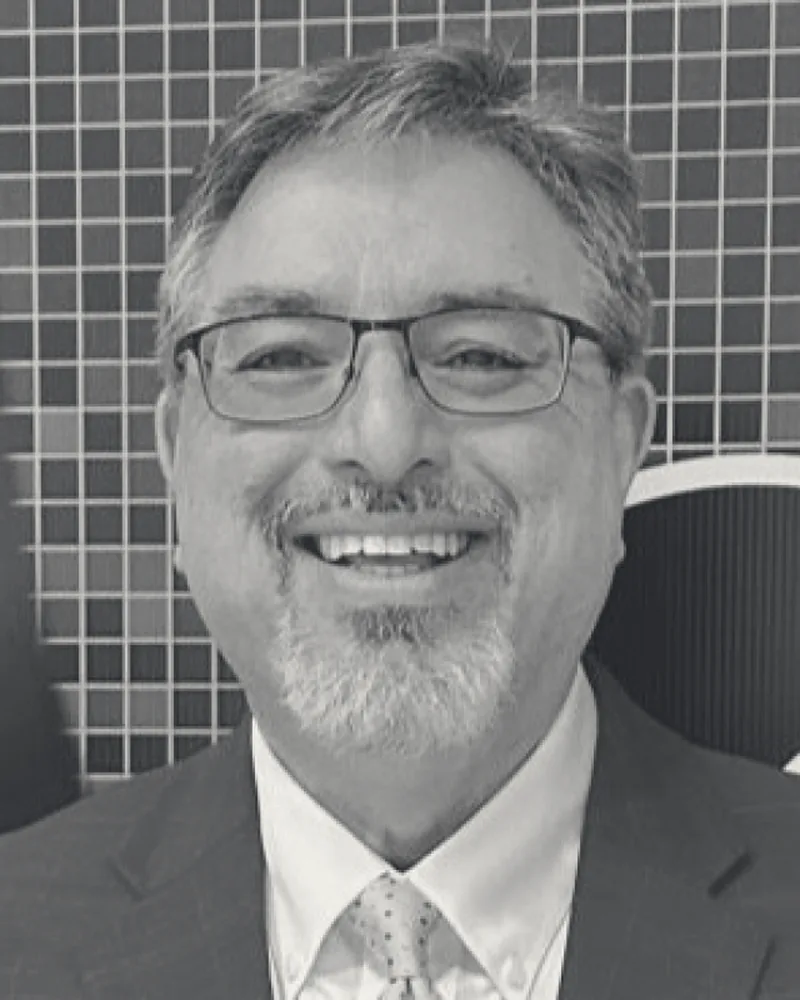
Army
Malik Jaffer
- Generation
- First Generation
- Branch
- Army
Before
Malik Jaffer enlisted in the Army in 1987. His older brother Karim had enlisted in 1984 and was serving as a combat medic.
The Army he joined was a Cold War army, six years into the Reagan build-up. It kept divisions in Germany and Korea, hospitals and clinics at its posts, and a medical branch that trained its own technicians for the specialties those hospitals needed.
Service
He trained as an orthopedic technician and served eight years, from 1987 to 1995. He was based in Los Angeles.
The Army trained its orthopedic technicians in its own program, and the course came before the ward. The work was the cast room and the clinic: fractures, dislocations, traction, splints, and the follow-up of broken bones and joint injuries. A cast room is where fractures are set and plaster is applied. Setting a fracture is a matter of alignment: the bone has to be brought back to where it was, and the cast has to hold it there. Orthopedic technicians worked with orthopedic surgeons, nurses, and physical therapists, and the job was a hospital job rather than a field one.
His eight years ran from the last years of the Cold War into the Gulf War era. The Berlin Wall came down in 1989, and the Army fought Iraq in 1991. The Army he left in 1995 was smaller than the one he joined.
After
He left the Army in 1995 and went back to school. He took a master's in public health in international development at Boston University, then two executive certificates at the Harvard School of Public Health, one in health systems decentralization and one in human resources for health.
By 1998 he was in Tanzania, as country director for the Aga Khan Foundation, with a $12 million budget and rural agriculture and health programs across the country. The foundation is an agency of the Aga Khan Development Network, and its work is rural development and health.
Then came South Africa and the President's Emergency Plan for AIDS Relief. He worked through the U.S. Agency for International Development, first on HIV care and treatment and then on health systems. The annual budget he managed was $77 million, and the programs reached 1.8 million South Africans with care. At the State Department he was on the core team for the $650 million bilateral program.
One program began with a two-million-dollar proposal he wrote. It was for voluntary medical male circumcision, a way to cut HIV transmission, and it ran: since its launch, more than 1.5 million South African men have chosen the procedure.
He moved institutions as well as programs. He led the conversion of 23,000 civil society health workers onto the South African government payroll, and he helped write the Ideal Clinic Model, the standard the country still uses to measure primary care clinics.
Between the programs he built companies. The Mobilizer Guru, a mobile marketing company he founded, grew to seven figures and seven million subscribers, and he wrote the book that went with it. His consulting firm, MJC, founded the International Happiness Institute, whose programs reached more than 50,000 South Africans. At IntraHealth he ran CapacityPlus, a $200 million project across 22 countries. The tools his team built gave the Ugandan government numbers it had never had; the government added $20 million to its health budget and hired 8,000 workers. He later directed global health and development at CAMRIS.
He has published what he built: an analysis of laughter therapy across 28 care groups and more than 10,000 adults and children, and a second paper, "Healing with Happiness," on what the therapy did for the South African HIV caregivers who delivered it. He holds fifteen professional awards and eight academic ones, and he has given more than twenty-five conference presentations and keynotes.
He is now chief operating officer at PotholeRepair.com, a national company in the DC-Baltimore area, and he runs Thriveon Group LLC, a management consulting and training firm he founded. He has not stopped building.
Service record
- Branch
- Army
- Years
- 1987–1995
- Rate / MOS
- Orthopedic Technician, Medical Branch
The post hospital
The Army of the 1980s kept hospitals at its posts in the United States and Germany. A post hospital served the Soldiers stationed there, their families, and the retirees who stayed near it, and orthopedics was one of its clinics.