Army
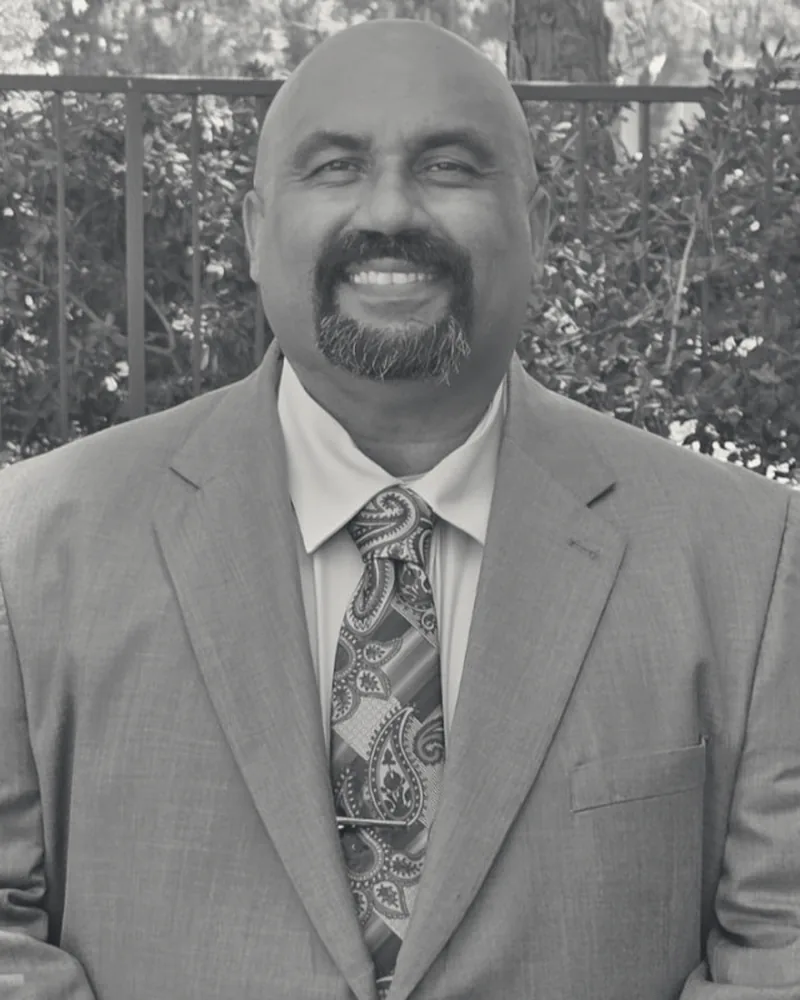
Raed Hashmani
- Generation
- Second Generation
- Branch
- Army
Before
Raed Hashmani enlisted in the Army in 1991 and trained as a 92A, a supply specialist.
The Army he entered was already contracting. The Gulf War had ended in February 1991. The Soviet Union dissolved in December 1991, and the budget and the manpower that had been built against it began to fall. The Army he joined had more than 700,000 soldiers on active duty. The Army he left in 1999 was a third smaller. A supply specialist entering in 1991 entered a service that was counting what it had and what it could keep.
He was in for eight of those years.
Service
His active duty ran a little over two years. The work was supply: requisitions, inventories, issue, and the records that account for property. The specialty exists in headquarters and line units alike.
A 92A orders what a unit needs, receives it when it arrives, stores it where it can be found, and signs it out to the person who asked. The requisition starts the order, the receipt records its arrival, and the hand receipt transfers responsibility from the supply room to the soldier who has it now. The inventory closes the count and proves it. A missing item can become a financial liability case, and the paperwork is the evidence. The supply room keeps the property book: what the unit owns.
The signature is the point. A hand receipt puts a name against an item, and the name is what the supply room can produce when the item is missing.
The job is the reason a unit can move. A unit does not move on its orders; it moves on its parts, its fuel, its food, its batteries, and the paperwork that follows each of them. The truck needs tires, the radio needs a battery, and the soldier at the far end of the line needs what the supply room promised. A supply specialist is the person who knows what is on hand, what is on order, and what has already been signed for.
It is a job measured in things that did not go wrong: the part on the shelf when the work order came, the count that matched, the load that left with what it was supposed to carry. The output is that the unit has what it was promised.
His own account puts the split at a little over two years on active duty and six in the inactive reserve. He was out in 1999.
After
After the Army he worked security at warehouses while he put himself through junior college. He finished at California State University, Dominguez Hills, in 2006, with a degree in business management and marketing.
In 2011 he joined Panasonic Avionics in Irvine as a service performance manager. The company makes inflight entertainment and connectivity systems for airlines.
The job sat between the customer and the company: the customer's needs on one side, engineering and internal support on the other. In his account, the work was to reconcile the two and keep product reliability and performance up. The product was aviation electronics, and a grounded aircraft costs its operator money by the hour. He was in the role from 2011 to 2026 — fifteen years in the same shop.
He lives in Orange County, where he attends the same Jamat Khana as Salim Rahemtulla, the Navy veteran who brought him into the Ismaili Warrior Alliance in March 2026.
The job he learned in the Army is measured in things that did not go wrong. At Panasonic the measure was an aircraft that stayed in service.
Service record
- Branch
- Army
- Years
- 1991–1999
- Rate / MOS
- 92A, Supply Specialist
The 1990s Army
The Gulf War ended in February 1991. By 1999 the active Army was smaller by more than 200,000 soldiers, and the force that remained was being reorganized around shorter deployments and smaller operations.